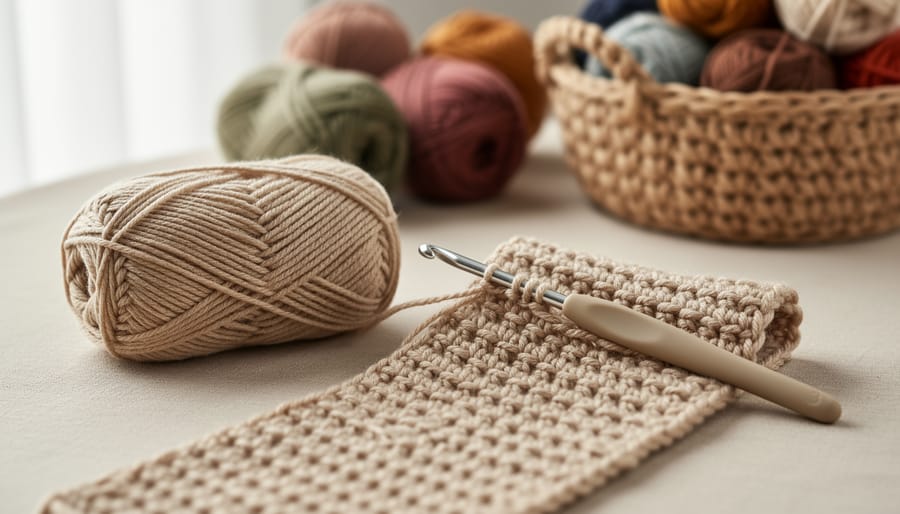
Easy scarf crochet patterns come down to three choices: a forgiving stitch, a worsted weight yarn, and a 5 to 5.5mm hook. For a standard adult scarf, plan on roughly 400 to 600 yards. Most worsted weight skeins hold 180 to 220 yards, so two or three will do it. The finished scarf lands around 6 to 8 inches wide and 60 to 72 inches long, a size that works for nearly everyone.
Worsted weight, sometimes labelled medium or weight 4, is where I’d tell any beginner to start. It’s thick enough that your stitches are easy to see and count, yet fine enough to drape nicely around the neck. Thicker yarns cover more ground with fewer yards, while thinner ones take more yardage to make the same size fabric, which is why the numbers shift if you go bulky or fingering.
I came to crochet the way I came to sewing, through a pile of fabric I couldn’t stop touching, and why I love fabric is the same reason I’m picky about yarn: the feel in your hands decides whether you finish a project. Below you’ll find seven beginner-friendly scarf patterns, from a simple chain-and-single-crochet first win to a graceful lacy shell, plus yarn pairings and softer alternatives if you want more drape. Pick one, grab a skein or two from a Canadian yarn shop if you can, and start.
How These Seven Beginner Scarf Patterns Were Chosen
I didn’t want to hand you a random pile of patterns, so I used a short checklist. Every scarf on this list had to pass it. Here’s what I looked for:
- Basic stitches only: chain, single crochet and double crochet.
- A simple row you repeat, so it’s easy to memorize.
- Beginner-friendly worsted weight yarn (weight 4).
- Good drape, so the scarf hangs softly instead of standing stiff.
- Easy to resize in both length and width.
A quick note on two words. Drape is how a finished fabric falls and moves, a bit like how a silky blouse flows compared with a crisp canvas tote. Yardage is simply how many yards of yarn you’ll need, and it’s printed right on the label.
The repeating row is my favourite criterion. Once your hands learn the rhythm, you can chat, watch a show or sip tea without counting every stitch. That’s what turned my own wobbly first attempt into a habit, and it’s a lot like the calm of sewing a long, straight seam.
One honest note: this is a curated list built on those criteria, not a product test. I haven’t swatched every yarn or timed every pattern, so think of it as a friendly shortlist to get you started. Next up, a few quick facts about yardage and size so you can shop with confidence.
Quick Facts Before You Buy Yarn: Yardage, Weight and Size
Before you head to the shop, it helps to know how much yarn a scarf actually swallows. The short version: thicker yarn covers more ground with fewer yards, and thinner yarn needs lots more to make the same size fabric. That’s why the yardage changes so much from one weight to the next.
For a standard adult scarf, here’s the rough range to plan around:
– Worsted weight: about 400 to 600 yards
– Bulky weight: about 300 to 450 yards
– Fingering weight: about 600 to 800 yards
Most skeins of worsted weight yarn hold between 180 and 220 yards, so a worsted scarf usually means two to three skeins. With that yardage, you’ll end up with a scarf roughly 6 to 8 inches wide and 60 to 72 inches long, which is a comfortable, wrap-around size.
If you’re picking a yarn weight for your very first project, weight 4 (also called medium or worsted) is the friendliest place to start. It pairs nicely with a 5mm or 5.5mm hook, and the stitches are big enough that you can actually see what you’re doing. That’s the combination I’d steer you toward for the first few patterns on this list.
A little tip from my own mishaps: buy one skein more than you think you need. Dye lots can vary from batch to batch, and nothing’s more disheartening than running short and finding the replacement skein is a slightly different shade. A mismatched stripe halfway through a scarf is a lesson you only need to learn once.
When you’re ready to shop, it’s worth browsing local Canadian yarn and fabric shops, since seeing and squeezing the fibre in person tells you a lot about softness and drape. If you’re not sure where to buy yarn near you, that’s a good starting point for finding shops that carry textiles and fibres. And if you’re stocking up on hooks, stitch markers and the other sewing supplies that make crafting easier, you can often grab them in the same trip.
1. The Simple Chain-and-Single-Crochet Scarf: Your First Win
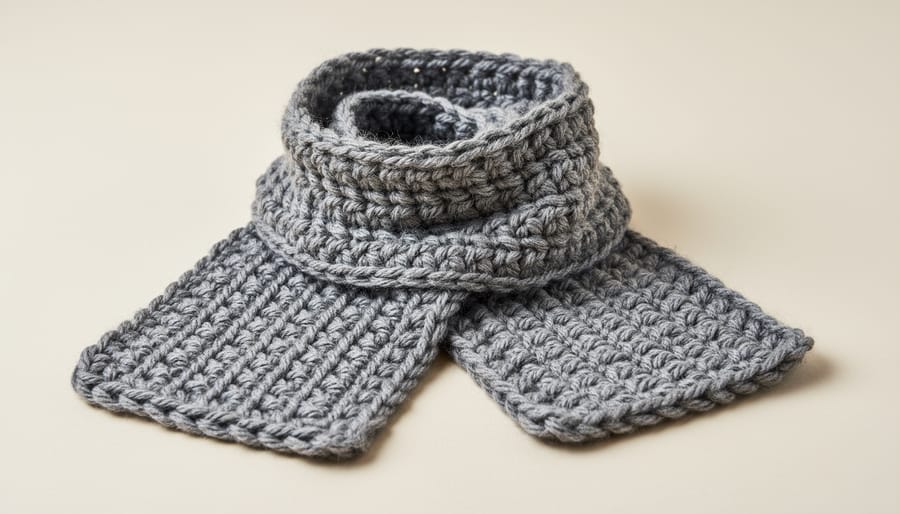
This is the scarf I’d hand to anyone who has never picked up a hook. You chain a foundation row to the width you want, then work single crochet back and forth until it’s long enough. That’s the whole pattern.
I made my first finished scarf this way, in a plain worsted weight yarn with a 5mm hook. It was far from perfect, and the ends looked like they’d been drawn by a toddler. But I wore it all winter, and it taught me that finishing something matters more than finishing something flawless.
Single crochet makes a tight, sturdy fabric, which is exactly why it forgives so much. Each stitch is short and sits snugly against its neighbours, so a slightly loose stitch or an uneven tension tends to disappear into the texture. In worsted weight, expect a dense, cozy scarf with less drape than taller stitches give, which is a trade-off worth making for your first project.
The classic beginner trap is edges that creep inward, usually because a stitch gets skipped or an extra one sneaks in at the turn.
Aim for roughly 6-8 inches wide, and your edges will stay as straight as the pattern intends.
2. The Half Double Crochet Ribbed-Look Scarf: Soft and Squishy
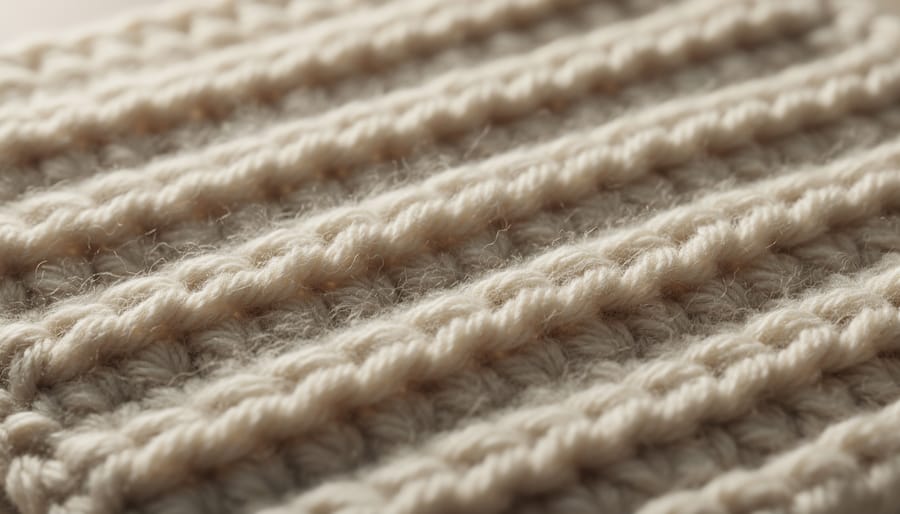
The half double crochet scarf is where I stopped fighting my hook and started enjoying the rhythm. It sits right between single crochet and double crochet: you yarn over before inserting the hook, then pull through all three loops at once. That one small change makes the stitch a touch taller, so the fabric grows faster than single crochet without turning loose or floppy.
In texture, half double crochet feels cushioned and a little squishy, with a soft, slightly horizontal ridge that gives a ribbed look. Single crochet makes a dense, sturdy fabric, while half double has more give and a gentler drape. It’s a nice middle ground if you want warmth that still bends around your neck.
It suits worsted weight yarn (weight 4) with a 5mm or 5.5mm hook. At that size the stitches stay snug enough to hold their shape, yet open enough to feel soft. Aim for a scarf about 6 to 8 inches wide and 60 to 72 inches long, which usually takes roughly 400 to 600 yards of worsted yarn. Check your first few rows against that width as you go, and you’ll stay on track without much fuss.
3. The Classic Double Crochet Scarf: Fast and Drapey
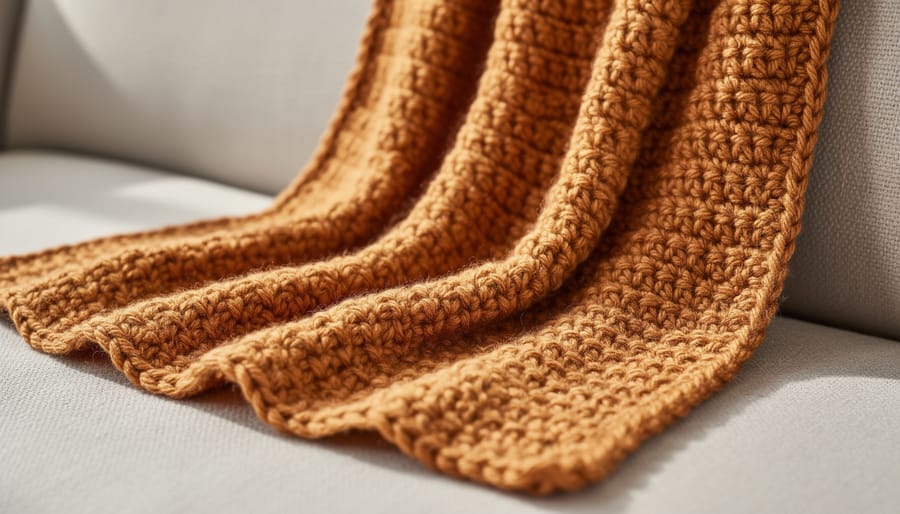
Double crochet is a wonderful second step once your chains and turning chains feel comfortable. Each stitch stands taller than single crochet, so the rows grow quickly and the fabric turns looser and more fluid. That bit of openness is exactly what gives a scarf drape, because the stitches have room to swing instead of packing tight.
I think of it as the point where a scarf stops feeling like a swatch and starts feeling like something you’d actually wear. Pick a worsted weight (weight 4) yarn and a 5mm or 5.5mm hook, and expect to use roughly 400 to 600 yards for a standard adult scarf.
Width is the part to watch. Aim for about 6 to 8 inches, which is a comfortable scarf width. Because double crochet is taller, chain a foundation, work one row, then hold it up against your hand. If it’s running wide, pull out and start again with fewer chains. A stray stitch that drifts in or out is easy to spot early.
If you’re building a stash for this one, worsted leftovers and reclaimed materials are a lovely, low-waste way to get going.
4. The Moss (Linen) Stitch Scarf: Textured but Still Easy
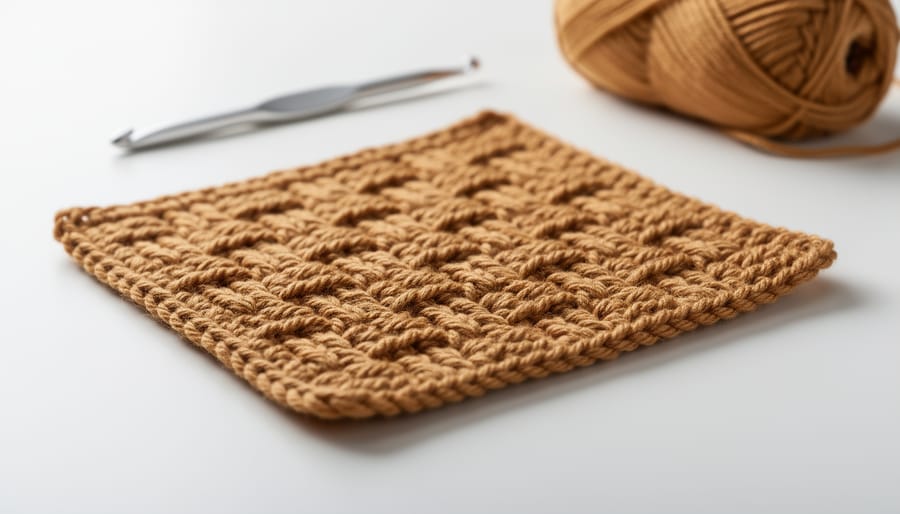
The moss stitch (also called the linen stitch) is the pattern that makes people ask, “Wait, you crocheted that?” It alternates a single crochet with a chain space, then tucks the next single crochet into that space on the following row. The result is a dense, slightly nubby fabric that looks woven, and it lies flat instead of curling at the edges.
What I love is how sophisticated it looks for how little it asks of you. You are still only using chains and single crochet, the same basics from your first scarf, just in a gentle rhythm. Once you spot the pattern, you can stop counting and let your hands take over.
The fiber matters here. Plant-based yarns like bamboo or cotton blends give moss stitch a fluid, almost fabric-like hand, a bit like a soft linen woven from a sewist’s stash. A worsted weight yarn (weight 4) with a 5mm or 5.5mm hook keeps it beginner-friendly, and you can aim for a scarf about 6 to 8 inches wide. Swatch a few rows first to feel the drape before you commit.
5. The Simple Granny Stripe Scarf: A Stash-Busting Favourite
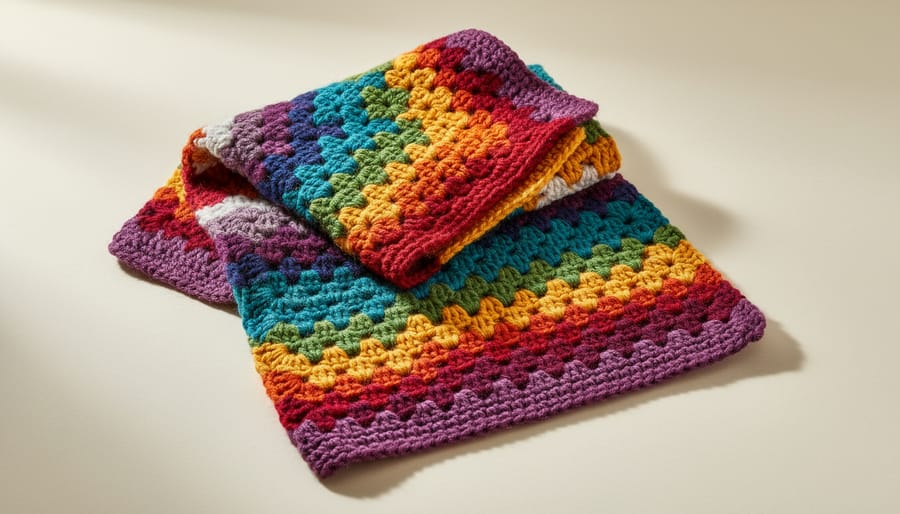
The granny stripe scarf is the one I reach for when my yarn basket starts overflowing. It’s simple: work rows of double crochet in little clusters, then swap colours every row or two. Because each stripe is its own small chunk of colour, those half-used skeins from old projects finally get a purpose, and the clusters give the fabric an easy, drapey openness.
To estimate yardage when you’re mixing colours, think in totals rather than per colour. A standard worsted-weight adult scarf takes about 400-600 yards, so lay out your odd skeins and add up what each one holds. Most worsted skeins contain 180 to 220 yards, which makes a quick sum easy. Aim for a finished scarf around 6-8 inches wide and 60-72 inches long. If one colour runs low, just fold it into the next stripe, and keep a spare skein in a neutral shade to tie everything together.
6. The Chunky Bulky-Weight Quick Scarf: A One-Evening Project
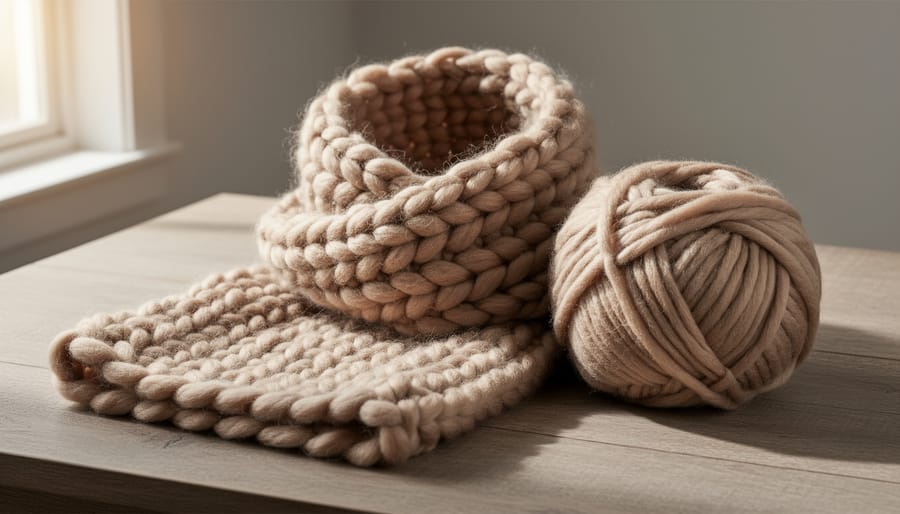
This is the one I reach for when a cold snap hits and I want a scarf by bedtime. Work it in bulky yarn with a larger hook, and a plain chain-and-single-crochet or half double crochet rectangle grows startlingly fast, so one evening really can be enough.
The reason it works is simple: thicker yarn covers more space with fewer yards. A standard adult scarf in bulky weight takes roughly 300 to 450 yards, compared with 400 to 600 in worsted. Aim for the usual 6 to 8 inches wide and 60 to 72 inches long, and you’ll have far less to crochet than with thinner yarns.
There’s a trade-off, though. Bulky yarn means more weight and more bulk at the neck, so the scarf can feel heavy and won’t tuck neatly under a coat collar. That’s part of its cozy charm, but it’s worth knowing before you commit. If you’d rather keep it lighter, choose a softer, loftier fiber and swatch first to see how it drapes.
While you’re picking yarn, it’s worth reading up on why natural fibers matter, since fiber changes both warmth and weight. Feel a few skeins in person at your local Canadian yarn shop, and buy an extra skein so your dye lots match.
7. The Fingering-Weight Lacy Shell Scarf: A Graceful Next Step
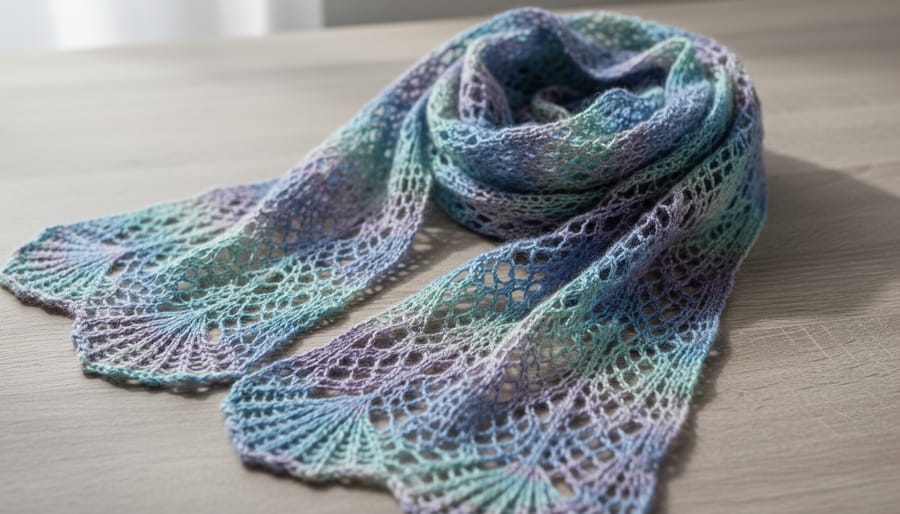
If the first six patterns feel easy, this one is a gentle stretch goal rather than a requirement. A lacy shell scarf in fingering weight is a step up, and it’s fine to stay with the simpler scarves for as long as you like.
Fingering weight is the thinnest yarn on this list, and thinner yarns take more yardage to build the same size of fabric. For a standard adult scarf, plan on about 600 to 800 yards, compared with 400 to 600 in worsted. Aim for roughly 6 to 8 inches wide and 60 to 72 inches long. It also takes more patience, since each row works up smaller and the scarf grows more slowly than the chunky one-evening project.
The reward is drape. Fingering weight crochets into a light, flowing fabric that falls softly around the neck, and the lacy shell stitches add airy openness. It’s the kind of scarf that makes you want to slow down and enjoy the rhythm of it.
I’d suggest working a small swatch first, because a swatch shows you how the stitch moves before you commit to hundreds of yards. Give yourself a little extra time, put on something good to listen to, and treat it as a quiet project rather than a race.
Choosing Soft, Drapey Yarn: Acrylic, Bamboo, Merino, Silk and Cashmere Blends
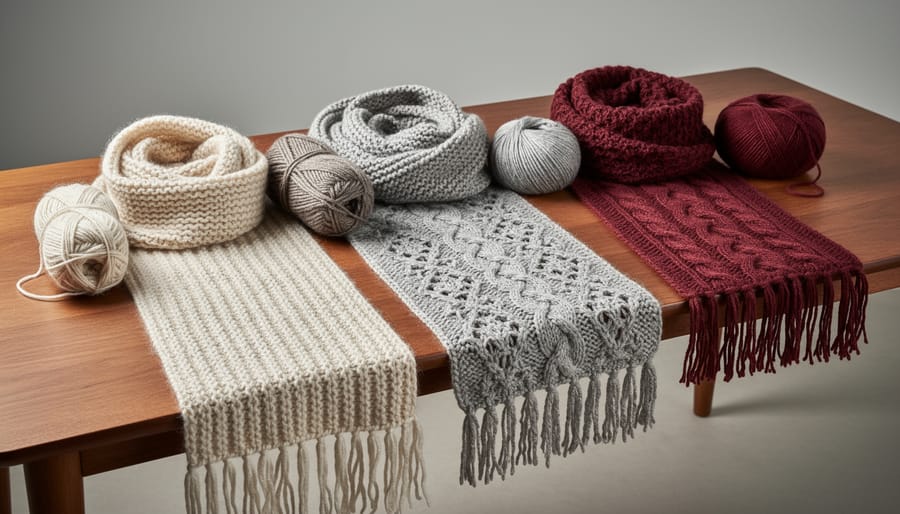
Here’s the thing I learned the hard way: the fiber you pick changes how a scarf hangs more than the stitch does. Same pattern, different yarn, and you can end up with something stiff as a placemat or something that flows.
Acrylic is the friendly default for a first scarf. It’s budget-conscious, easy to care for, and forgiving when you’re still finding your tension. I’d never dismiss it. A good acrylic in worsted weight is a perfectly lovely place to start, and it suits the Simple Chain-and-Single-Crochet Scarf especially well.
Bamboo is the one to reach for when drape is the goal. It feels cool and silky, and it makes the Classic Double Crochet Scarf fall in a long, fluid line. It can feel slippery on the hook, so give yourself a few rows to settle in.
Merino wool brings warmth and a bit of bounce. It’s lovely in the Half Double Crochet Ribbed-Look Scarf, where that cushioned texture really shows off the fiber.
Silk blends add a gentle sheen that makes even a humble stitch pattern look special, and they pair nicely with the Moss (Linen) Stitch Scarf.
Cashmere blends are the softest of the bunch and a true splurge. Save them for when you want something extra luxurious against your neck.
Sustainability depends less on the label and more on how a yarn is made and how long you’ll care for it. A scarf you wear for years in any fiber beats a pricier one that sits in a drawer.
If you’re in Canada, I’d encourage you to visit your local yarn shops and fabric stores. Feeling a skein in your hands tells you more than any description can. Squeeze it, drape it over your wrist, hold it to your cheek.
Finally, a fabric-minded tip from the sewing side of my life: swatch first. A small square worked in your chosen yarn with a 5mm or 5.5mm hook shows you the drape before you commit to 400 to 600 yards of worsted.
Beginner Scarf Crochet FAQs
A lot of the same questions come up when someone is about to cast on their first scarf, so here are the ones I hear most. Every answer below comes back to the same three starting points: worsted weight yarn, a mid-size hook and a pattern that repeats a simple row.
How much yarn do I need for a scarf?
For a standard adult scarf, plan on roughly 400-600 yards of worsted weight, 300-450 yards of bulky or 600-800 yards of fingering weight. Most worsted skeins hold 180-220 yards, so two or three skeins usually does it.
What yarn weight should a beginner use?
Start with weight 4, also called medium or worsted weight. It’s easy to see your stitches in, and it works up at a comfortable pace, which makes any of the seven patterns above a gentle first project.
What hook size goes with worsted weight?
A 5mm or 5.5mm hook pairs nicely with worsted weight yarn. If your fabric feels stiff, try the larger hook for more drape.
How wide and long should a scarf be?
A typical scarf lands around 6-8 inches wide and 60-72 inches long. Thicker yarns cover more space with fewer yards, while thinner yarns need more yardage to reach the same size.
Which yarn is softest, and can you use sewing-fabric scraps instead? Cashmere blends and bamboo tend to feel softest and drape beautifully, while acrylic is the friendly budget choice. And yes, you can cut leftover fabric into strips and crochet with them. Treat it as a fun experiment, and swatch first to see how the fabric behaves.
Have you finished a first scarf, wobbly edges and all? I’d love to hear how it turned out, so share it in the comments and tell us which yarn you chose!
Here’s the whole plan in one breath: a worsted weight yarn, a 5mm or 5.5mm hook, and any one of these seven easy patterns is a dependable route to a soft, drapey first scarf. The stitch matters, but the fiber you pick shapes the drape just as much, so choose the yarn for the way you want it to hang.
So cast on this week, even if it’s just a few evening rows while the kettle boils. Crochet sits comfortably alongside our other Sewing Project Guides, since it comes from the same love of good textiles. I’d love to hear how yours turns out, so share your scarf and your favourite yarn finds with the community.