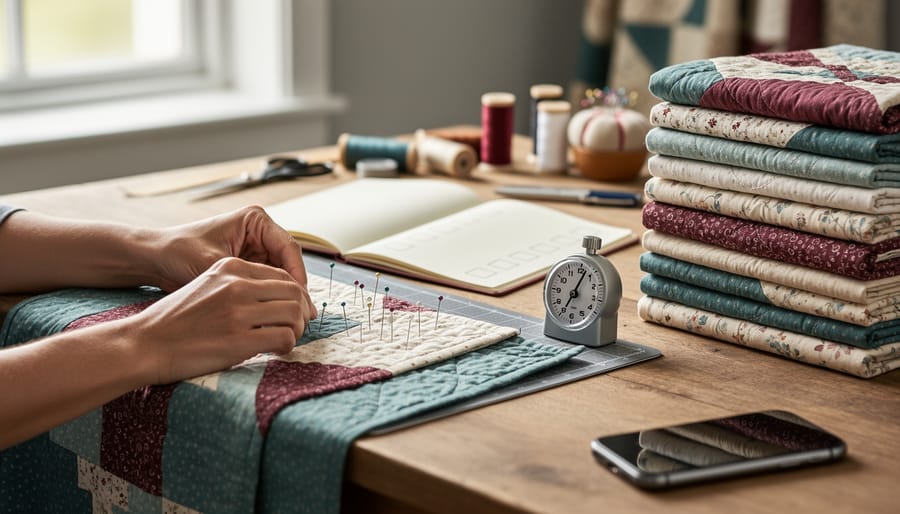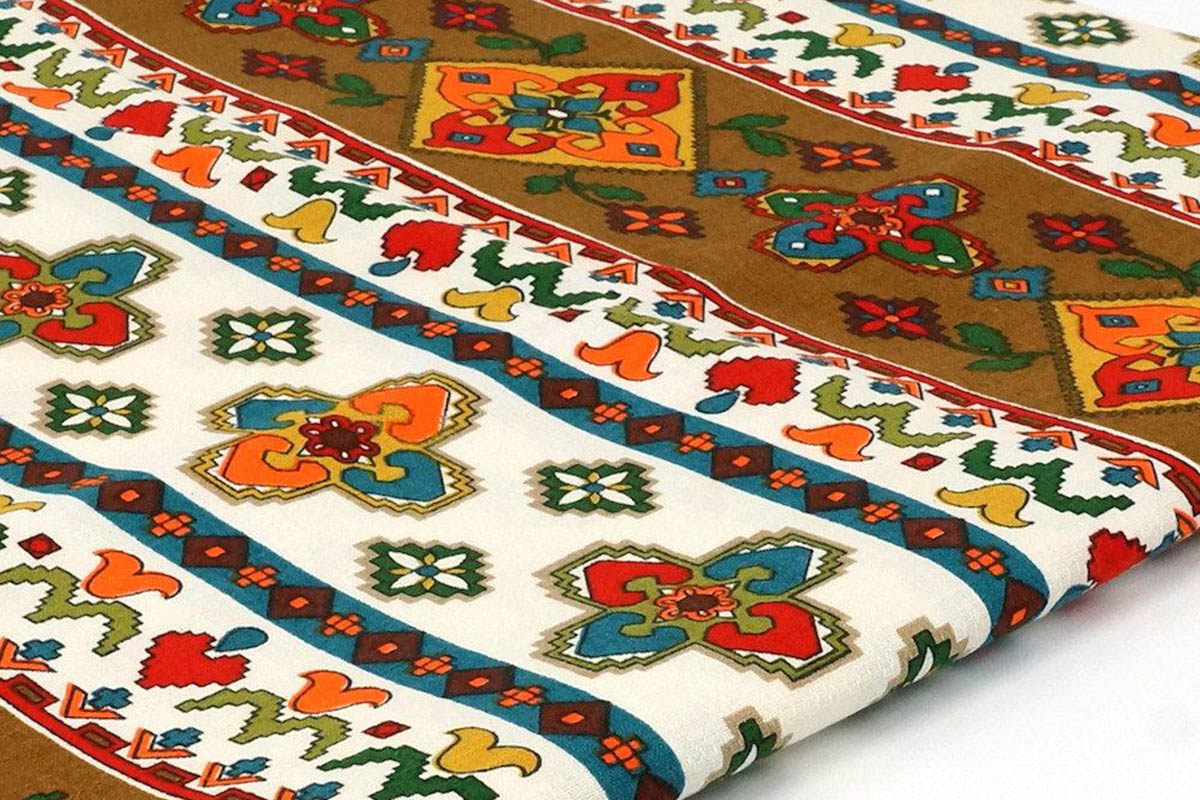
Run your fingers across vintage linen and feel centuries of human ingenuity woven into every thread. Textiles carry stories that pre-date written language, connecting us to ancestors who transformed raw fibers into protection, beauty, and cultural identity long before the first words were ever recorded.
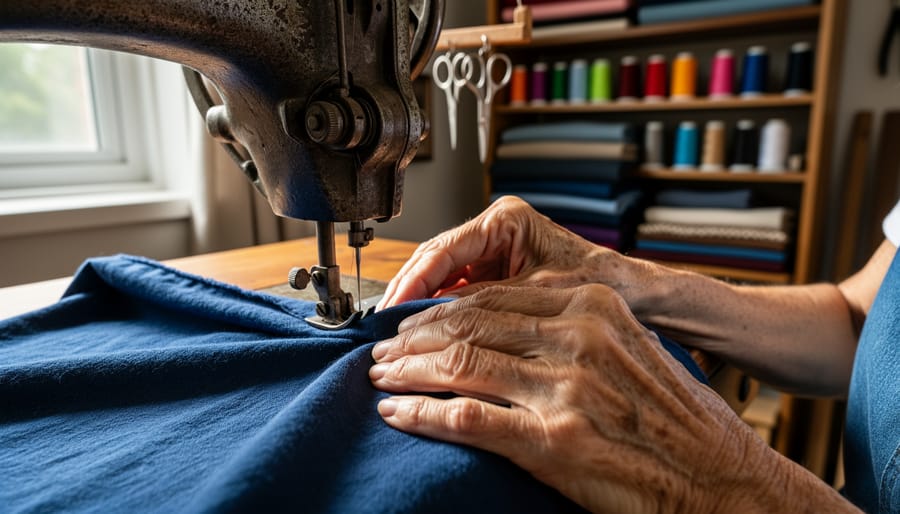
I discovered this truth at seven years old, watching my grandmother’s hands guide indigo-dyed cotton through her sewing machine in her Toronto studio. The fabric she worked with wasn’t just material—it was a direct descendant of techniques practiced in ancient Egypt, methods refined through millennia and carried across oceans to reach her worktable. That moment planted a seed that grew into a lifelong fascination with how textiles document human civilization.
The history of textiles is fundamentally the history of innovation itself. When Neolithic peoples first twisted plant fibers into thread around 5000 BCE, they initiated a technological revolution that would shape economics, politics, and culture for thousands of years. The Silk Road wasn’t named for spices or gold—it was named for fabric, the commodity valuable enough to connect distant civilizations. Medieval European cities rose to power through wool trade. The Industrial Revolution began not with steam engines in general, but specifically with textile manufacturing machines that transformed cotton processing.
Today’s sustainable fashion movement echoes these ancient priorities. Our ancestors understood what fast fashion has made us forget: textiles require skill, time, and respect for materials. Whether you’re sourcing organic cotton from Canadian mills or learning traditional quilting patterns, you’re participating in humanity’s oldest creative tradition—one that connects your scissors and thread to every maker who came before you.
The Threads That Bind: Why Textiles Capture Young Hearts
The Sensory World of Fabric
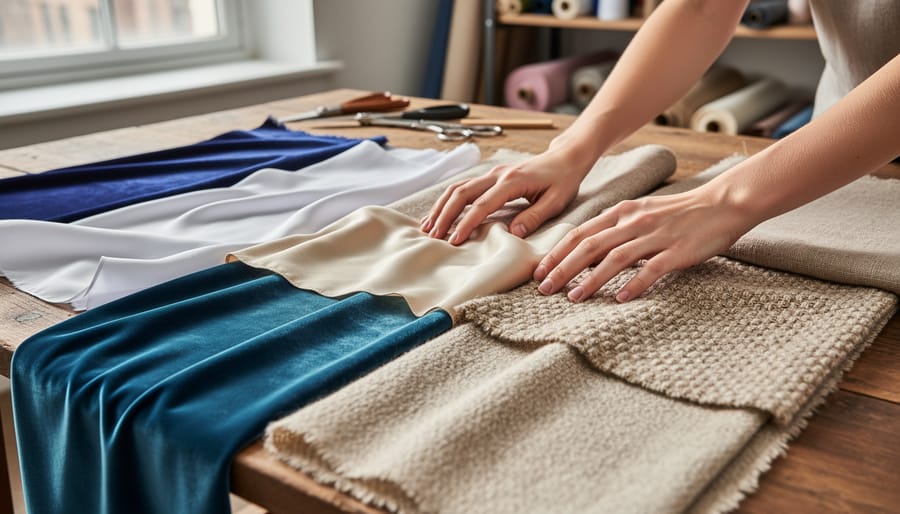
I remember being four years old, sitting cross-legged on my grandmother’s sewing room floor, surrounded by fabric scraps that felt like treasure. Each piece told a story through touch—the cool slipperiness of silk against my palm, the satisfying rough-and-tumble texture of denim, the cloud-soft embrace of flannel. I’d close my eyes and try to guess what fabric I was holding, a game that turned sensory exploration into pure magic.
Textiles engage children in ways few other materials can. There’s something primal about running your fingers across woven threads, feeling the ridges and valleys of different weaves. Corduroy became my childhood favorite because of those parallel ridges that made a soft whooshing sound when I stroked them quickly—a textile that you could hear as well as feel. Velvet fascinated me with its directional nap, how it changed color depending on which way you brushed it, darker then lighter, like a reversible magic trick.
The visual feast of fabric equally captivated my young imagination. Florals bloomed eternally on cotton quilting fabric, plaids created mathematical precision in wool, and prints told stories of faraway places. I’d hold sheer organza up to the window, watching how light transformed it into something ethereal, then compare it to the light-blocking density of canvas.
These early sensory experiences weren’t just child’s play—they were building blocks for understanding textile construction, quality, and character. Today, when I source Canadian fabrics for projects, I still rely on that tactile knowledge learned decades ago on my grandmother’s floor. Teaching children to explore fabric through all their senses creates future makers who truly understand their materials.
When Play Becomes Purpose
I remember the first time I truly understood fabric had a life of its own. I was seven, sitting cross-legged on my grandmother’s sewing room floor, surrounded by a kaleidoscope of remnants she’d saved over decades. There were jewel-toned velvets from old curtains, crisp cottons from summer dresses, and mysterious scraps of lace whose origins she’d long forgotten. I wasn’t just playing—I was designing entire worlds, draping my dolls in makeshift ball gowns held together with safety pins and imagination.
This kind of textile play might seem trivial, but it’s where so many creative careers begin. When children manipulate fabric, they’re not just keeping busy; they’re developing spatial reasoning, understanding how two-dimensional materials transform into three-dimensional forms, and learning that mistakes can be unpicked and reimagined. Those hours spent wrapping, pinning, and inventing taught me more about drape and construction than I realized until years later when I found myself at a design table, those childhood instincts guiding my hands.
Many Canadian designers I’ve spoken with share similar origin stories—a parent’s scrap bin, a treasured dress-up box, or the magical discovery that fabric responds to vision and touch, becoming whatever we dare to imagine it could be.
My First Textile Memories: Where the Passion Started
The Fabric Stash That Started It All
I still remember the afternoon I discovered my grandmother’s fabric trunk in her basement, tucked behind boxes of old photographs and holiday decorations. The moment I lifted that heavy lid, the scent of aged cotton and mothballs transported me to another era. Inside lay carefully folded pieces of fabric—some still wrapped in their original paper sleeves from now-defunct Canadian fabric shops, others clearly salvaged from garments long gone.
My grandmother had passed away the previous winter, and sorting through her belongings felt like archaeological work. Each fabric told a story: a piece of cheerful yellow gingham she’d planned to make into kitchen curtains in 1962, a length of rich burgundy velvet from a formal dress, and most intriguingly, scraps of worn cotton printed with tiny flowers that she’d saved from flour sacks during the Depression years. Those flour sack pieces fascinated me most—evidence of a time when fabric was precious enough to repurpose from everyday packaging.
I’d always enjoyed sewing, but this discovery transformed my relationship with textiles entirely. These weren’t just materials; they were historical documents, family memories stitched into fiber. I found myself wondering about the hands that had selected each piece, the projects imagined but never completed, and the resourcefulness required in eras when fabric wasn’t readily disposable.
That trunk became my gateway into textile history, sparking questions about how people sourced, valued, and used fabrics throughout different periods. It made me realize that understanding where our materials come from—whether vintage finds or modern sustainable options—connects us to a longer story of creativity and craftsmanship.
My First Handmade Garment
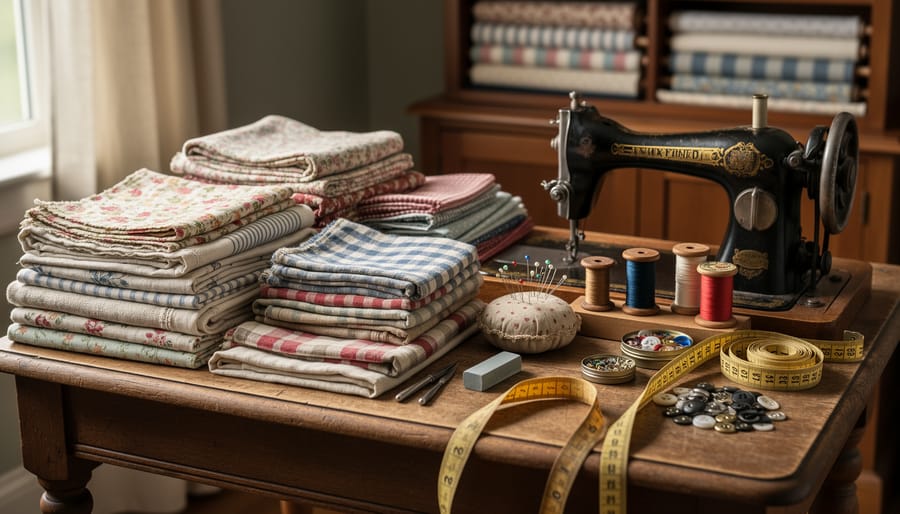
I still remember the afternoon I decided to make my first garment from scratch. I was twelve, armed with a secondhand sewing machine my grandmother had passed down, a pattern for a simple A-line skirt, and a length of cotton fabric I’d found at a local shop. Looking back, that experience taught me far more than how to follow pattern markings or thread a bobbin—it opened my eyes to the entire world of textiles and what goes into creating something wearable.
The fabric I chose was a cheerful floral print, probably manufactured somewhere overseas, though I didn’t think to ask at the time. What captivated me was the weight of it in my hands, the way the pattern repeated across the yardage, and the slight resistance when I pulled it on the bias versus the straight grain. These weren’t concepts I had words for yet, but my fingers were learning a language that predated any formal education.
The actual sewing process was humbling. My stitches wandered, my seams puckered, and I accidentally sewed the waistband inside out twice before getting it right. But with each mistake came understanding. I learned that textiles have personalities—this cotton was forgiving, willing to be pressed and re-sewn without showing too much wear. I discovered that patience wasn’t just a virtue but a practical necessity when working with fabric that shifts and stretches under your hands.
That first garment, imperfect as it was, sparked a lifelong curiosity about where textiles come from, how they’re made, and why certain fabrics behave the way they do. It connected me to generations of makers before me who had worked with their hands to create something both functional and beautiful.
A Brief Journey Through Textile History That Shaped Us All
The Textiles Our Grandmothers Knew
Many of us have vivid memories of discovering grandmother’s sewing basket tucked away in a closet, or inheriting a cedar chest filled with fabric remnants and half-finished quilts. The textiles from the 1940s through 1970s tell stories of resourcefulness, creativity, and a different relationship with clothing than we have today.
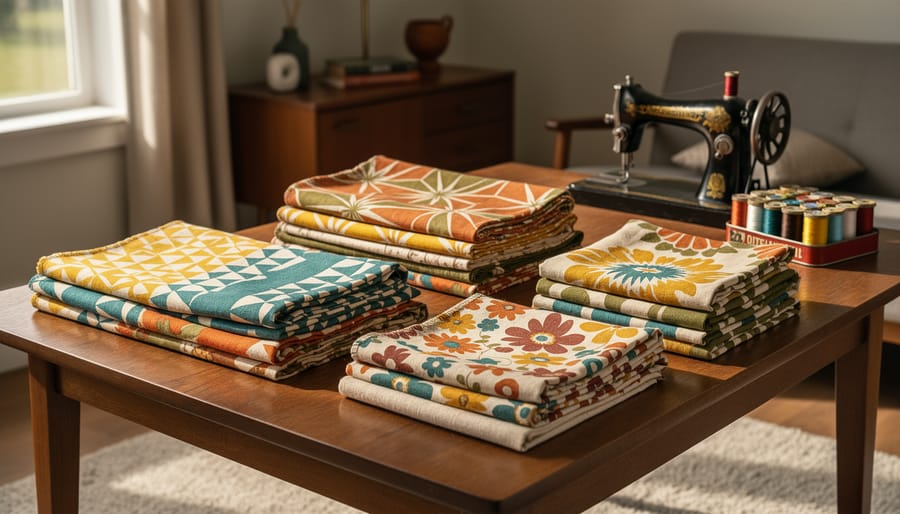
During this era, home sewing wasn’t just a hobby—it was an essential household skill. Post-war fabric manufacturers responded with an explosion of patterns and prints designed specifically for the home seamstress. Cheerful ginghams, polished cottons in geometric prints, and the revolutionary easy-care polyester blends became staples in every fabric shop. Our grandmothers could create entire wardrobes from Butterick or Simplicity patterns, often spending evenings at the sewing machine while listening to the radio.
What strikes me most about these mid-century textiles is their optimism. The bright florals, bold colour-blocking, and whimsical novelty prints reflected a generation looking forward after difficult times. These weren’t disposable fabrics—they were chosen carefully, sewn thoughtfully, and worn proudly. A single dress might be altered multiple times, then transformed into a child’s outfit, and finally cut into quilt squares.
When you discover these vintage pieces today, whether in your own family collection or at estate sales, you’re holding more than fabric. You’re touching a time when people understood textile value deeply, when mending was normal, and when creating your own clothing was both economical necessity and creative expression. This knowledge feels remarkably relevant as we reconsider our modern relationship with fast fashion and seek more sustainable approaches to our wardrobes.
When Homemade Meant Everything
For most of human history, making textiles wasn’t a hobby—it was survival. Our great-great-grandmothers didn’t browse fabric stores on Saturday afternoons for fun. They spun, wove, and sewed because their families needed clothing, bedding, and household linens. In colonial North America, including early Canadian settlements, a woman’s ability to transform flax or wool into usable fabric could mean the difference between comfort and hardship through brutal winters.
Consider this: before the Industrial Revolution, a single linen shirt required approximately 500 hours of work, from growing flax to the final stitches. Every family member participated—children carded wool, mothers spun thread, and communities gathered for quilting bees that were equal parts necessity and social lifeline.
This legacy resonates deeply with today’s makers. When we sit at our sewing machines, we’re connecting with generations of skilled hands. The difference? We choose this connection. Modern sewists reclaim these skills not from obligation but from desire—to create sustainable wardrobes, to slow down in our fast-paced world, to craft something meaningful with our own hands.
That choice transforms everything. What was once survival becomes self-expression. What was mandatory becomes meditative. By understanding this history, we honour the expertise of our ancestors while celebrating our freedom to make textile arts a passion rather than a burden.
The Fabric Stories We Inherit
Every vintage textile whispers stories of the hands that touched it, the occasions it witnessed, and the lives it accompanied. When I hold a piece of mid-century Canadian wool or examine the delicate stitching on a grandmother’s handkerchief, I’m not just touching fabric—I’m connecting with a living history. These textiles carry emotional weight that new materials simply can’t replicate, serving as tangible bridges between generations.
In Canada, our textile heritage reflects the diverse tapestry of our nation’s story. From Hudson’s Bay blankets that traveled with fur traders across frozen landscapes to Quebecois woven coverlets showcasing centuries-old patterns, each piece tells us something about who we were and who we’ve become. Indigenous communities have particularly rich textile traditions, with beadwork and woven materials representing cultural identity and artistic excellence passed down through countless generations.
The beauty of working with historic textiles lies in their ability to inspire contemporary creativity while honoring the past. When you incorporate a vintage piece into a modern project, you’re not just upcycling—you’re becoming a curator of memory, ensuring these stories continue forward. This connection to heritage transforms sewing from mere craft into an act of preservation and respect.
Nurturing Textile Passion: From Childhood Interest to Professional Practice
Learning Beyond the Classroom
The beautiful thing about textile arts is that your education never really stops—and honestly, that’s what keeps the passion alive. When I first moved beyond recreating historical pieces into understanding the why behind different techniques, I discovered an entire world of learning opportunities that transformed my relationship with fabric.
Canadian textile enthusiasts are particularly fortunate. Organizations like the Textile Museum of Canada in Toronto offer workshops, lectures, and hands-on sessions where you can actually touch and examine historical textiles under expert guidance. I’ll never forget the first time I examined an 18th-century sampler up close—seeing the actual thread tension and tiny corrections the maker had stitched changed everything about how I approached my own work. Many provincial museums across Canada also host textile study groups and conservation workshops that welcome curious learners at all skill levels.
Online communities have become invaluable for self-directed learning. The Canadian Textile Study Group connects enthusiasts nationwide, while social media groups focused on historical sewing and sustainable textile practices offer daily inspiration and problem-solving support. I’ve learned more from generous community members sharing their dyeing experiments and pattern adaptations than from any single book.
Don’t overlook local resources either. Community colleges often offer continuing education courses in textile arts, and guild meetings—whether for weaving, quilting, or historical costume—welcome visitors. I stumbled into a local spinning guild meeting years ago and discovered mentors who generously shared knowledge passed down through generations.
Libraries remain treasure troves too. Interlibrary loan systems across Canada can access rare textile history books, and many university libraries allow community members access to their collections. Combine these resources with hands-on practice, and you’re building genuine expertise while connecting with a community that understands why textiles matter.
Keeping the Wonder Alive
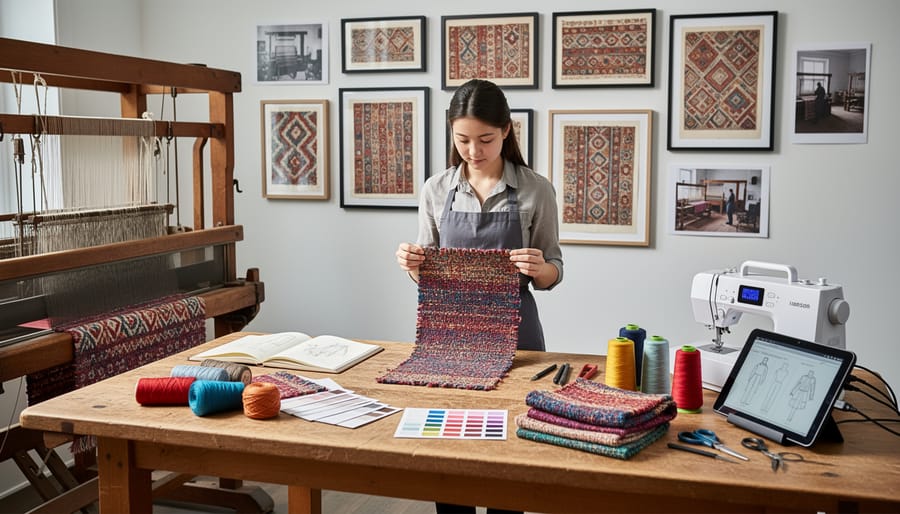
The journey from childhood wonder to professional skill doesn’t have to mean losing the magic that drew you to textiles in the first place. I’ve watched too many talented sewists and designers gradually lose their spark as they focus solely on technique, marketability, or keeping up with trends. The key is remembering that your love for textiles didn’t start with perfect seam allowances or understanding drape—it started with something deeper, more visceral.
One practice that’s kept me grounded is maintaining a “no-pressure” project alongside any professional or skill-building work. This might be a hand-stitched crazy quilt with no deadline, experimenting with natural dyes just for curiosity’s sake, or recreating a historical garment purely for the joy of it. These projects serve as reminders that textiles are about more than productivity or perfection. They’re permission to play, to fail, to follow your curiosity without judgment.
I also recommend creating a textile memory box—actual fabric swatches, inspiration images, or even photographs of textiles that moved you. When burnout threatens, spending time with these materials can reconnect you to your “why.” Maybe it’s the indigo-dyed linens you saw at a folk museum, or the worn quilt from your grandmother that first taught you about the stories woven into cloth. These tactile memories anchor us when the pressure of improvement feels overwhelming.
Community connection matters enormously here. Finding other textile enthusiasts who share your values—whether through local sewing circles, online communities, or workshops focusing on traditional techniques—creates space for mutual encouragement. When I’m feeling disconnected from my practice, hearing someone else’s excitement about sourcing Canadian hemp fabric or mastering historical buttonholes reminds me we’re all on this journey together.
Finally, give yourself permission to learn slowly and imperfectly. Textile history spans millennia, filled with makers who spent lifetimes mastering single techniques. Your passion doesn’t need to become expertise overnight. Sometimes the most profound growth happens when we stop pushing and simply sit with fabric in our hands, remembering what it felt like to discover textiles for the very first time.
Why Your Textile Story Matters
Your personal textile story isn’t just a nostalgic memory—it’s a vital thread in the larger fabric of craft preservation and sustainable fashion. Every time you recall that first embroidery project, that childhood quilt, or the moment you fell in love with a particular fabric, you’re participating in something much bigger than yourself.
When I speak with fellow sewing enthusiasts, I’m always struck by how their individual textile journeys mirror broader cultural movements. Perhaps your grandmother taught you to mend clothes during an era when fast fashion hadn’t yet dominated our closets. Maybe you discovered sewing as an adult, seeking an antidote to disposable fashion culture. These aren’t just personal choices—they’re acts of resistance against the throwaway mentality that has disconnected us from the value of handmade goods.
Your textile history carries knowledge that books alone cannot preserve. The way your mother showed you to finish a seam, the specific tension she used when threading her machine, or even the mistakes you made learning to match patterns—these experiences embody tacit knowledge that craft traditions depend upon for survival. When you share these stories, whether through social media, local sewing circles, or simply teaching a friend, you’re ensuring that generations of textile wisdom don’t disappear in our digital age.
For those of us passionate about sustainable fashion, our textile origins often explain why we care so deeply. If you grew up watching someone transform scraps into something beautiful, you inherently understand the value in every piece of fabric. This perspective becomes increasingly precious as we confront the environmental costs of textile waste. Your story validates choosing quality over quantity, repair over replacement, and mindful creation over mindless consumption.
Here in Canada, where we’re fortunate to have access to both traditional textile heritage and innovative sustainable fabric sources, our individual stories help build a community committed to better practices. When you share why textiles matter to you, you give others permission to honor their own connections to cloth and craft. You create space for meaningful conversations about what we make, how we make it, and why it matters.
Your textile journey—with all its imperfections, discoveries, and moments of pure creative joy—deserves to be remembered, shared, and celebrated as part of our collective commitment to preserving craft and building a more sustainable future.
Standing at my sewing table today, surrounded by bolts of Canadian-sourced cotton and vintage buttons collected over years, I’m struck by how my personal textile journey mirrors the vast tapestry of human history itself. Every stitch we make, every fabric we choose, every project we complete adds another thread to a story that stretches back millennia. The hands that first twisted plant fibers into cordage, the medieval weavers at their looms, the industrial revolution seamstresses, and you, right now, reading this—we’re all connected by this remarkable human tradition.
What makes textiles so powerful is precisely this continuity. When I learned to sew from my grandmother, I wasn’t just acquiring a skill. I was receiving knowledge passed down through countless generations, joining an unbroken chain of makers who understood that creating with fabric is both practical art and profound expression. Your childhood fascination with textiles wasn’t frivolous or unusual—it was an instinctive recognition of this deep human connection, a pull toward something that has shaped civilization itself.
The beauty of textile history is that it never truly ends. Each generation reinvents, reimagines, and rediscovers these timeless crafts. Today’s sustainable fashion movement echoes the careful resource management of our ancestors. Modern digital printing technology creates possibilities medieval dyers could never imagine, yet we’re still fundamentally doing what humans have always done: transforming raw materials into meaningful objects that tell our stories.
I’d love to hear your textile story. What’s your earliest fabric memory? Did you have a grandmother who quilted, a parent who mended with care, or perhaps you discovered sewing entirely on your own? Share your experiences in the comments below—whether it’s a cherished childhood project, a treasured family textile, or the moment you fell in love with fabric. Every story matters because together, we’re weaving the next chapter of textile history, one stitch, one project, one memory at a time.