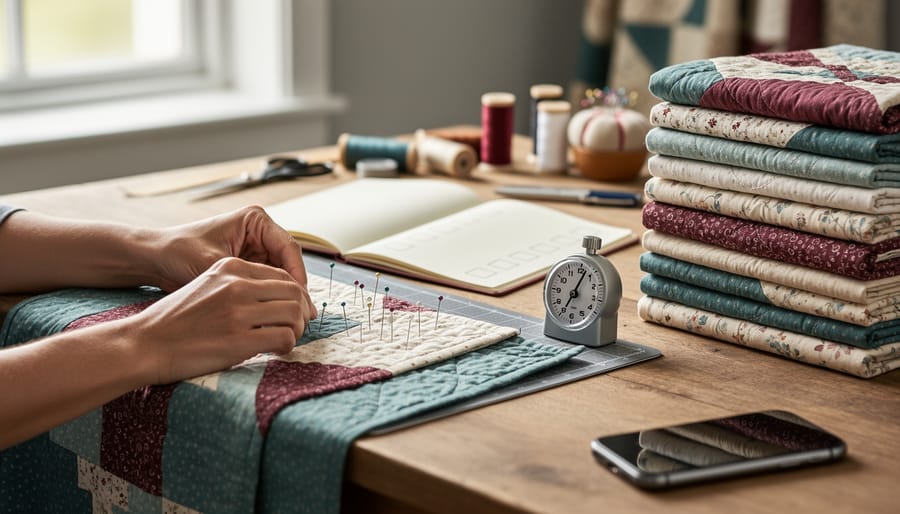

Compare at least three AI-powered lending platforms like Radcred that specialize in small business financing, focusing specifically on those that understand creative industries and sustainable ventures. Request personalized loan matches by preparing a clear business plan highlighting your commitment to ethical manufacturing, eco-friendly materials (bonus points for Canadian-sourced organic cotton or deadstock fabrics), and transparent supply chains—AI algorithms prioritize businesses with defined sustainability metrics.
Calculate your actual funding needs before engaging with matching platforms: determine whether you need capital for that industrial serger you’ve been eyeing, initial fabric inventory from sustainable mills, certifications like Fair Trade or GOTS, or scaling your made-to-order production. Document your current revenue, even if it’s modest sales from local markets or online shops, as AI systems assess viability through growth patterns rather than just current size.
Prepare digital proof of your sustainable practices—photos of your workspace using renewable energy, invoices from ethical suppliers, customer testimonials emphasizing quality and longevity over fast fashion, and any community engagement like repair workshops or sewing classes. These elements strengthen your application because AI matching systems increasingly weigh social impact alongside traditional financial metrics.
The sustainable fashion financing landscape has transformed dramatically. Where traditional banks once dismissed small-batch designers and eco-conscious makers as too risky, AI-driven platforms now recognize the growing market demand for ethical fashion and the fierce customer loyalty sustainable brands command. This technology democratizes access to capital, matching your unique business model with lenders who actually understand why investing in a solar-powered studio or zero-waste pattern cutting matters for long-term success.
The Funding Gap in Sustainable Fashion
Why Banks Don’t Understand Your Business Model
Traditional banks operate on formulas built for conventional retail—predictable inventory turnover, quick sales cycles, and profit margins that follow standard industry benchmarks. When you walk into a bank with a sustainable fashion business plan, their evaluation system immediately flags concerns that don’t actually represent your reality.
I’ve watched talented designers get rejected for loans because their business model doesn’t fit the fast-fashion template. Banks see your commitment to ethical sourcing, fair wages for artisans, and quality materials that last for years, and their algorithms interpret this as “slow-moving inventory” and “high costs with uncertain returns.” On paper, your decision to produce 200 thoughtfully crafted pieces instead of 2,000 mass-produced items looks like limited scalability.
Here’s what banks miss: Your customers aren’t bargain hunters flipping through clearance racks. They’re invested in your story, willing to pay premium prices for garments that align with their values. That vintage Canadian wool you sourced for your winter collection? A bank sees expensive materials eating into margins. Your customer sees heritage craftsmanship worth every penny.
The metrics that make sustainable fashion viable—customer lifetime value, brand loyalty, reduced returns due to superior quality—don’t translate easily into traditional loan applications. Your three-month production timeline using organic textiles appears risky compared to a two-week fast-fashion cycle, even though your model builds lasting customer relationships and stronger profit margins over time.
The Real Cost of Choosing Sustainability
Let’s be honest—choosing sustainability isn’t always the cheaper path, at least not upfront. When I first committed to sustainable fabric sourcing, I was shocked to discover that organic cotton cost nearly double what conventional fabric did. A beautiful piece of GOTS-certified linen from a Canadian fabric sourcing supplier? Easily $35-45 per meter compared to $15-20 for standard options.
The costs extend beyond materials. Ethical manufacturers who pay fair wages and maintain safe working conditions typically charge 20-40% more than conventional factories. Then there’s transparency—tracking your supply chain, conducting audits, and obtaining certifications all add administrative expenses that many new designers don’t anticipate.
I remember connecting with a small Toronto-based manufacturer who used deadstock fabrics and paid living wages. Their minimum order was higher, their timeline longer, but the quality and peace of mind? Incomparable. However, my initial collection required nearly $8,000 more than if I’d gone the conventional route.
This is precisely where AI loan matching becomes valuable. Traditional banks often see these “premium” costs as red flags, not understanding that sustainability is increasingly what consumers demand. AI platforms can recognize that your higher material costs reflect market positioning and values alignment—factors that actually strengthen your business model for the conscious consumer market you’re targeting.
What AI Loan Matching Actually Means for Makers
Beyond the Algorithm: How AI Sees Your Business Differently
Traditional banks look at your business through a very narrow lens—credit scores, collateral, years in operation. But here’s where things get exciting: AI loan platforms are like having a lender who actually *gets* sustainable fashion. They’re analyzing the stuff that matters in our world but gets completely overlooked by conventional financing.
Imagine you’re a designer who’s built a loyal following on Instagram, where your customers rave about your upcycled denim jackets and tag you in photos wearing them years later. Or maybe you’ve partnered with local Canadian fabric suppliers to reduce your environmental footprint, creating a transparent supply chain your community genuinely cares about. Traditional lenders see none of this—but AI does.
These platforms dig into social media engagement patterns, customer retention rates, and even your environmental certifications. They notice when your email subscribers consistently open your newsletters or when customers return for second and third purchases. One sustainable brand I know couldn’t get approved at their bank despite having incredible customer loyalty and a waitlist for their next collection. An AI platform recognized that consistent demand and approved them within days.
The AI evaluates your community impact too—those partnerships with ethical manufacturers, your participation in local sustainability initiatives, or your commitment to fair wages. It’s assessing your business holistically, understanding that in sustainable fashion, strong values and engaged communities often translate to long-term viability better than traditional metrics ever could.
The Human Side of Smart Technology
I remember when my friend Sarah, a talented Toronto-based designer creating zero-waste garments, was turned down for traditional business funding. The loan officer admitted her “unconventional” business model—and perhaps her gender—made banks hesitant. It’s a story too many creative entrepreneurs, especially women, know all too well.
Here’s where AI loan matching offers something genuinely hopeful: algorithms don’t carry unconscious biases about who “looks like” a successful business owner. When programmed ethically, these systems evaluate your actual business metrics—sales trends, customer engagement, material costs, and growth potential—rather than making snap judgments based on stereotypes.
Of course, concerns about automated decision-making are valid. We should always ask: whose data trained this AI? What criteria does it prioritize? Reputable platforms are transparent about their methodology and offer human support when you need clarification or want to discuss unique circumstances in your sustainable fashion journey.
The beauty of AI matching is democratization. A sewist in rural Nova Scotia has the same access to financing opportunities as someone in Vancouver’s fashion district. The technology connects your specific needs—whether you’re sourcing organic Canadian linen or investing in industrial sergers—with lenders who actually understand and value sustainable fashion.
Think of AI as your tireless advocate, working 24/7 to find funding partners who appreciate what makes your creative business special, not despite its uniqueness, but because of it.
When AI Loan Matching Makes Sense for Your Fashion Projects

Funding Your First Sustainable Collection
I remember the excitement—and anxiety—of planning my first sustainable collection. I’d found incredible ethical fabric options, sketched designs I truly believed in, but hitting that financial wall felt crushing. Traditional banks didn’t understand small-batch production or why organic hemp cost more than polyester.
This is where AI loan matching becomes a game-changer for emerging designers. These platforms analyze your specific business model—including sustainable practices—and connect you with lenders who actually value ethical production. Instead of explaining why you need funds for GOTS-certified cotton to a skeptical loan officer, the AI matches you with investors seeking exactly your approach.
The beauty lies in the personalization. Enter details about your production timeline, fabric sourcing from Canadian suppliers, and batch sizes, and the system identifies financing options tailored to sustainable fashion’s unique cash flow. Some platforms even prioritize lenders offering favorable terms for eco-conscious businesses.
For your first collection, this means securing funds for quality materials without compromising your values or accepting predatory terms. You maintain creative control while accessing capital that understands slow fashion economics.
Scaling Up Without Selling Out
Meet Sarah, a Toronto-based designer who built her sustainable knitwear line from her dining room table. When demand outgrew her capacity, she turned to AI loan matching rather than traditional investors who wanted her to switch to cheaper synthetics. The algorithm connected her with a community-focused lender who understood that her commitment to Canadian-sourced organic wool wasn’t just idealism—it was her brand’s foundation.
AI loan matching helps makers like Sarah find financing that respects their values. These platforms consider factors traditional banks miss: your community engagement, customer loyalty, and dedication to quality sewing materials. The technology learns which lenders support businesses prioritizing ethics over volume.
Another example: Vancouver’s small-batch denim workshop secured equipment financing through AI matching that recognized their zero-waste pattern cutting as an asset, not an expense. The right lender saw their meticulous production methods as proof of sustainability, not inefficiency.
The key is finding financial partners who view your commitment to ethical practices as a competitive advantage worth investing in, allowing you to grow thoughtfully while staying true to your craft.
Bridging Seasonal Cash Flow Gaps
One of the biggest challenges I’ve witnessed in the sustainable fashion community is the seasonal cash flow squeeze. Picture this: you’ve found an incredible organic cotton supplier in Quebec, but they require a 50% deposit three months before delivery. Meanwhile, your winter coat collection won’t generate revenue until fall shopping begins. This timing mismatch can feel impossible to navigate.
AI loan matching platforms excel at understanding these seasonal patterns unique to fashion businesses. They analyze your sales cycles, production timelines, and inventory needs to connect you with lenders who specialize in bridge financing. Rather than applying to traditional banks unfamiliar with why you need funds in May for October sales, these systems match you with financiers who genuinely understand fashion’s rhythm.
I’ve spoken with several Canadian designers who’ve used AI matching to secure pre-ordering capital for deadstock fabrics—those beautiful, sustainable textiles that require quick decisions and immediate payment. The algorithms consider weather-dependent sales patterns too, recognizing that a Toronto-based coat maker has different cash flow needs than a Vancouver swimwear designer. This intelligent matching means you’re not explaining your industry’s quirks repeatedly; you’re connected with lenders who already get it.
Navigating AI Loan Platforms as a Creative Entrepreneur
Telling Your Story to an Algorithm
When preparing your loan application for AI matching platforms, think of it as translating your creative passion into data points that algorithms can recognize and celebrate. Start by quantifying your sustainability practices—whether that’s the percentage of organic cotton you use, waste reduction metrics from your zero-waste pattern cutting, or carbon savings from sourcing Canadian fabrics locally. These concrete numbers help AI systems identify you as a strong candidate for green financing programs.
Tell your story through structured categories the algorithm expects: your business model, target market, unique value proposition, and growth projections. But don’t lose your authentic voice! Many platforms now analyze narrative responses, so weave in your journey—perhaps how you transformed vintage textiles into a thriving upcycling business or built a community around slow fashion principles.
Include specific keywords that resonate with sustainable finance: “circular economy,” “ethical production,” “transparent supply chain,” and “community impact.” Document your credentials too—certifications like GOTS or Fair Trade, memberships in sustainable fashion organizations, or partnerships with eco-conscious suppliers.
I’ve found that attaching visual portfolios—lookbooks, behind-the-scenes photos of your workspace, or customer testimonials—can make a difference on platforms that analyze multi-format submissions. Remember, you’re not just applying for funding; you’re showcasing why your sustainable vision deserves investment.
Red Flags and Green Flags in AI Lending
When I first explored AI lending platforms for my sustainable fashion projects, I learned quickly that not all platforms truly understand our values. Here’s what helped me separate the genuine supporters from those just jumping on the green bandwagon.
**Red flags to watch for:** Be wary of platforms that lack transparency about their algorithms or can’t explain how they evaluate sustainable businesses. If a platform promises instant approvals without asking about your environmental practices or supply chain, they’re likely not considering sustainability as a real factor. Hidden fees, vague terms about interest rates, or pressure to accept offers immediately are warning signs. I once encountered a platform that claimed to support “eco-friendly” businesses but couldn’t define what that meant—a major red flag.
**Green flags to embrace:** Look for platforms that ask detailed questions about your sustainable practices, Canadian sourcing partnerships, and environmental impact. Genuine platforms will showcase other sustainable fashion businesses they’ve funded and offer educational resources specific to ethical fashion. They should provide clear, upfront information about rates, terms, and why they matched you with specific lenders. The best platforms connect you with loan officers who understand concepts like circular fashion and ethical manufacturing—they’re speaking your language, which means they’re invested in your success.

The Future of Financing Ethical Fashion
The landscape of sustainable fashion financing is transforming rapidly, and it’s an exciting time for makers and designers committed to ethical practices. Traditional lenders are beginning to recognize what we’ve known all along: sustainable fashion isn’t just a trend—it’s the future of our industry, and it represents sound business sense.
ESG factors are now moving from the margins to the mainstream of lending decisions. This shift means your commitment to using organic cotton, supporting Canadian textile mills, or implementing zero-waste cutting techniques isn’t just ethically commendable—it’s becoming a genuine competitive advantage when seeking financing. Forward-thinking lenders are developing specialized assessment criteria that reward sustainable practices, recognizing that businesses built on ethical foundations often demonstrate stronger long-term viability and customer loyalty.
I recently spoke with a Toronto-based designer who secured favorable loan terms specifically because her business model emphasized local fabric sourcing and fair labor practices. Five years ago, those same features might have been overlooked or considered niche. Today, they’re viewed as risk-mitigation factors that demonstrate market awareness and adaptability.
The integration of AI into this evolving landscape is particularly promising for our community. These platforms are being trained to recognize the unique value propositions of sustainable fashion businesses—things like circular economy models, repair and alteration services, or made-to-order production that reduces waste. This technological understanding means better matches with lenders who truly comprehend your business model.
Looking ahead, we’re likely to see even more specialized financing products emerge: green bonds for sustainable fashion startups, impact investment funds focused on textile innovation, and community-supported financing models that align with the collaborative spirit already thriving in sewing and maker communities. The key is staying informed, building strong financial foundations, and continuing to tell the compelling story of why sustainable fashion matters—not just to our consciences, but to our collective future.
Embracing AI loan matching as part of your sustainable fashion journey isn’t about replacing the heart and soul you pour into your work—it’s about equipping yourself with tools that honor your creative vision while making it financially viable. Think of it as finding a partner who truly understands that your commitment to organic cotton sourcing or zero-waste pattern drafting isn’t just a nice-to-have; it’s the foundation of everything you create.
I’ve watched so many talented makers postpone their dreams because traditional financing felt like forcing a square peg into a round hole. AI loan matching opens doors by recognizing that sustainable fashion operates differently, valuing quality over quantity and long-term impact over quick returns. When you’re matched with lenders who share these values, you’re not just getting capital—you’re gaining allies who believe in what you’re building.
As our community grows, your experiences matter immensely. Have you explored AI loan matching for your sustainable fashion project? Whether you’ve secured funding for that beautiful collection using reclaimed Canadian textiles or you’re still navigating the process, sharing your story helps others find their path forward. Your insights about what worked, what surprised you, and even what didn’t go as planned create a collective wisdom that strengthens all of us.
Your creative independence and commitment to sustainability deserve support that meets you where you are. Take that first step—explore what’s possible, trust your vision, and know that the right resources are increasingly within reach.